














The Fast Facts
- Minoxidil and finasteride are the only ingredients approved by the Food and Drug Administration (FDA) for hair regrowth.
- You can find minoxidil and finasteride in over-the-counter (OTC) and prescription hair growth products. Some OTC products also contain other ingredients, like biotin.
- Happy Head Topical Finasteride and Minoxidil is our pick for the best prescription product.
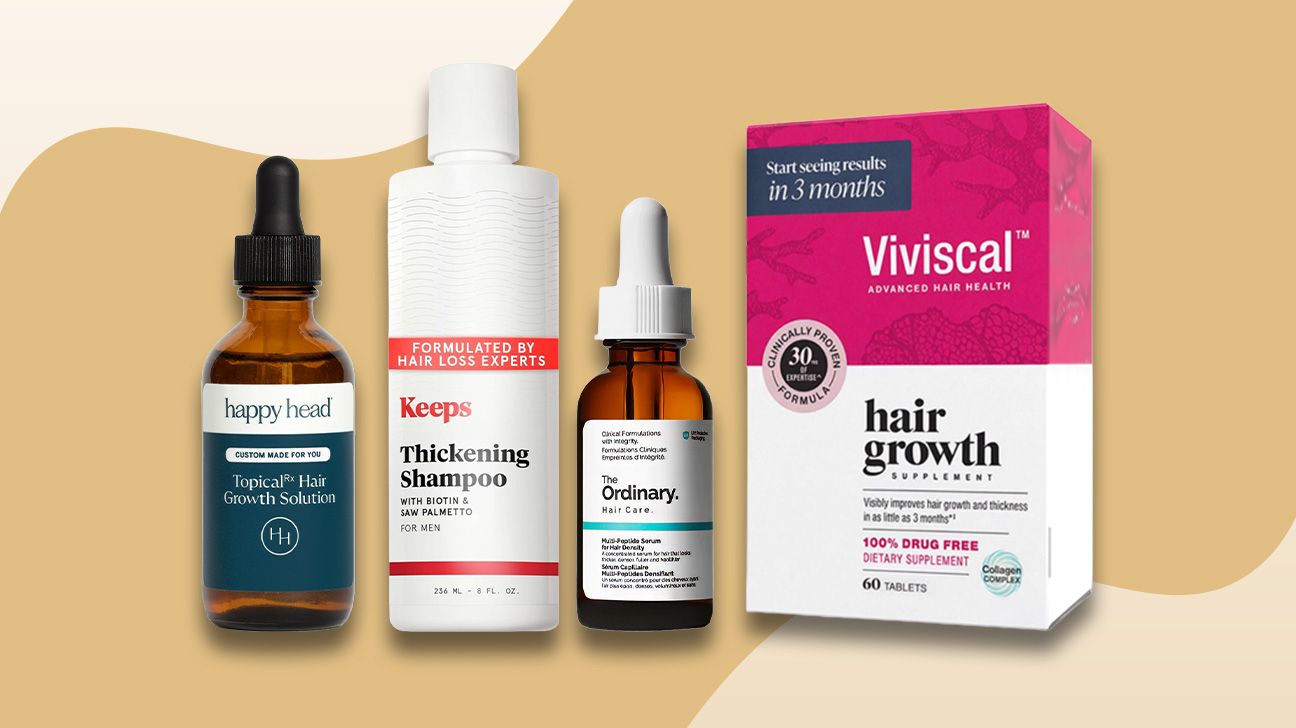
- Best serum for scalp stimulation: The Ordinary Multi-Peptide Serum for Hair Density | Skip to review
Hair thinning can happen to anyone, regardless of sex or age.
However, certain hair growth products are available that feature ingredients that can help slow down or even reverse thinning and keep your hair looking thick and healthy.
We analyzed the options, from prescriptions to OTC treatments, so you can select the best product for your needs.
- OLAPLEX Intensive Bond Building Hair Treatment: This formula contains a patented ingredient, bis-aminopropyl diglycol dimaleate, known as a β-unsaturated Michael acceptor. According to the company’s trials, the OLAPLEX intensive hair treatment can strengthen hair threefold in just one use. One complaint is that the sprayer doesn’t distribute the product well and can get messy. It’s sulfate-free, paraben-free, phthalate-free, color safe, vegan, and cruelty-free.
- Keranique Hair Regrowth Treatment For Women 2% Minoxidil Topical Solution: This contains a lower percentage of minoxidil than Rogaine, but it’s still available over the counter if you’re hesitant to try a stronger product. Like most hair loss products, it can take several months to see results.
- Frank Body Caffeinated Scalp Scrub: This is another over-the-counter option for those not quite ready for prescription ingredients. As the name implies, it includes caffeine to stimulate growth, rosemary oil to help prevent hair loss, and peppermint oil to improve scalp health. Some users complain that it’s messy and hard to rinse out because of the oils it contains.
• finasteride
• ketoconazole
• biotin
• conditioner
• serum
• chews
• oral and topical medications
• gummies
While many products have ingredients that companies claim to support hair growth, scientific research does not support all of those claims.
We looked for products and treatments from reputable brands with significant research backing and the most effective ingredients.
Our Medical Standards and Insights team independently vets all products to ensure they are safe, effective, and meet our quality standards.
We also looked carefully at customer reviews, choosing only products that real customers find useful in their experience.
When searching for hair loss products, it’s a good idea to start with the ingredients.
Some of the most effective ingredients for hair growth include dihydrotestosterone (DHT) blockers and inhibitors. DHT is a molecule derived from testosterone that causes hair loss.
The Food and Drug Administration (FDA) has approved only two ingredients for hair regrowth: minoxidil and finasteride. Both are DHT blockers, and manufacturers include them in various OTC and prescription medications.
Experts believe minoxidil works by partially enlarging hair follicles and lengthening the hair’s growth phase. Finasteride works by decreasing the amount of the hormone DHT in your body.
Here are some of the most commonly used ingredients in hair growth products. However, it’s important to note that strong clinical evidence does not support all of them for hair regrowth, and in some cases, the research is limited or based on older studies.
- Biotin: While companies widely market biotin supplements for hair health, clinical evidence shows limited support for their use in individuals without a documented biotin deficiency.
- Zinc: Low zinc levels are common in people with alopecia and are linked to hair loss, so zinc supplementation might help, but research has not yet proven it to be an effective treatment.
- Iron: An iron deficiency is often associated with hair loss. In some cases, iron supplements can help with regrowth.
- Collagen: Collagen is a protein that promotes hair health, though few studies indicate it can help with hair regrowth. Nevertheless, companies frequently include it in hair products.
- Niacin:
Older research has shown that niacin (vitamin B3) can help with hair fullness. In another lab study, niacinamide, a form of vitamin B3, has been shown to keep hair cells healthier and less likely to switch off growth. - Caffeine: Caffeine is frequently found in hair growth products, as it’s been
shown to stimulate hair growth, especially when applied topically. - Horsetail: Research suggests that horsetail benefits hair growth due to silicon and antioxidant contents.
- Saw palmetto: Saw palmetto extract may block 5 alpha-reductase (5AR), an enzyme that converts testosterone to DHT. A 2026 study found it promoted hair growth in men and women with self‐perceived thinning hair.
- Ginseng: Ginseng contains compounds that may encourage hair growth. This includes saponins, which
promote hair follicle growth in mice, and gintonin, which may be a suitable treatment for alopecia in humans.
Medical Perspective“I usually tell patients not to get distracted by long ingredient lists or marketing claims on hair growth products. The most important thing is choosing products with ingredients that actually have clinical evidence behind them and staying consistent long enough to see results.”
— Bukky Aremu, APRN
Discover 6 ways to make your hair grow faster and stronger.
Quotes represent the opinions of our medical experts. All content is strictly informational and should not be considered medical advice.
Like any product applied to the skin, hair loss treatments may cause reactions. Potential side effects of topical treatments may include:
- irritation
- redness or other color changes
- itching
- skin flaking
Similarly, oral treatments may cause side effects such as:
- skin rash
- dizziness
- shortness of breath
- fluid retention
- nausea
Be sure to check with a doctor before using any new hair growth product. If the product is topical, it’s best to do a patch test before use.
All treatments should have clear guidelines on safe use and potential side effects. Read any instructions carefully and follow them precisely.
- stress
- hormone imbalance
- thyroid disorder
- iron deficiency
- hereditary factors
You can find the best treatment option by exploring the cause behind your hair thinning with a doctor or dermatologist.
Always follow the specific instructions given on the box or bottle. Here are a few general tips to help you make the most out of your hair regrowth products:
- Thoroughly massage scalp treatments to help stimulate the hair follicles.
- Don’t overdo it. Using excessive amounts of your product will only cause buildup and block the hair follicles.
- Stick with a new product for a few weeks or even a month — results won’t appear immediately.
- Take hair supplements with food to avoid side effects.
A product’s effectiveness depends on the brand and its ingredients. A more expensive product doesn’t automatically mean that it is more effective.
Many factors, such as ingredient costs and the perceived popularity or luxury of the brand name, influence a product’s price. Not only that, but the product’s target audience can increase or decrease the price completely independent of how effective it actually is.
When looking for effective hair regrowth products, consider the ingredients and whether clinical evidence supports their ability to regrow or thicken hair.
For example, minoxidil (the active ingredient in Rogaine) has been proven to support hair regrowth for many people and is more likely to give you the results you are looking for than an untested ingredient.
Hair growth products don’t work instantaneously. Most products will start to work within a few months.
Hair follicles take a few weeks to become stimulated by your product, and after that, it will take a month or two before you notice new hair growth.
While physical hair growth may take several months, most products will improve the appearance of your hair’s thickness within a few weeks.
While serums work from the outside in, supplements work from the inside out. Ideally, you’ll be able to use both types of products at once for optimal results.
There aren’t yet studies showing the benefits of serums over supplements. However, in general, topical treatments tend to work more quickly than oral treatments.
In addition to using hair growth products, there are a variety of other methods to improve your hair’s thickness and health.
It’s also important to:
- get enough sleep
- exercise regularly
- reduce stress
- eat a balanced diet with fruits and vegetables
Learn more about the best foods for hair growth.
These products may do the trick if you’re looking for a hair growth boost. While many can help improve hair health, they rarely get to the root of the problem.
Always talk with a doctor to help determine the medical cause of your hair loss and find a more targeted solution.