Illustration of a pouch with a smart watch
Back

Exercise and Movement on GLP-1s

Exercise and Movement on GLP-1s

Exercising when you take a GLP-1 is crucial to mitigate muscle loss, a common side effect of losing weight rapidly.

Benefits and challenges of exercise on GLP-1s

Some benefits of staying active on GLP-1s include:

  • improves your metabolic health, so you burn more calories for longer.
  • helps you build bone density and functional strength, too.

What to know for diabetes: Exercise lowers blood sugar directly. If taking insulin or a sulfonylurea, intense exercise may cause it to drop too low. It’s important to talk with a doctor about taking GLP-1s when you’re also taking other diabetes medications and ask about exercise precautions to consider.

Healthy habits for exercising

When you exercise on a GLP-1, it’s important to:

  • drink plenty of water before you move
  • incorporate some sugar-free electrolyte drinks
  • eat a small meal before you go
  • go slow and watch for signs of needing to stop
  • have a protein snack after exercising

Start with short 10- or 15-minute sessions, one to three times a week, before lengthening them.

Dehydration and exercise

Because GLP-1s suppress your appetite, you might eat and drink less without realizing it, which may lead to low energy, lightheadedness, and dehydration.

Important: If you feel extreme thirst, dizziness, or sluggishness, stop exercising immediately.

Strength training for muscle protection

While doing cardio offers cardiovascular benefits, strength training is the priority when you’re taking GLP-1s to prevent significant muscle loss and avoid weakness.

What to know:

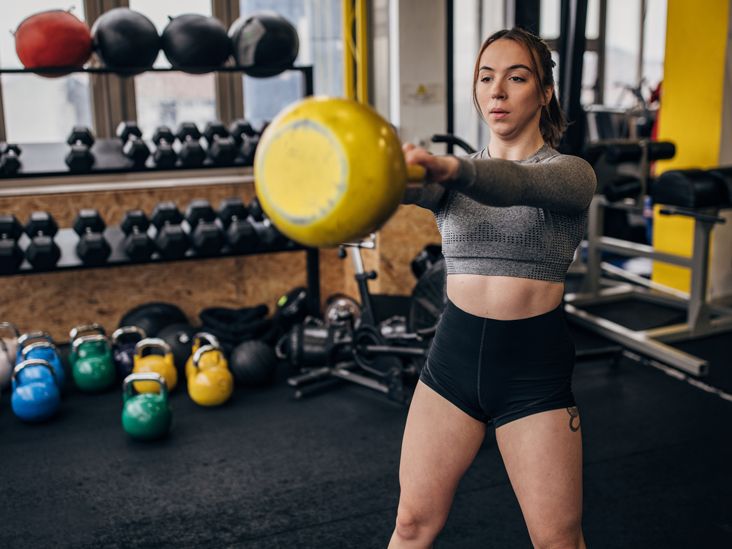
  • Strength train at least twice a week to help maintain your muscle mass while you’re on a GLP-1.
  • Aim for 60 to 90 minutes of resistance training per week (30-minute sessions two to three times a week). Make sure you eat and hydrate before and after.

Even doing body weight exercises consistently three times a week can make a meaningful difference.

If you have access to a gym or weights, compound lifts like deadlifts and bench presses engage multiple muscle groups at once.

Keep in mind that short, consistent strength training sessions build more muscle than long, infrequent ones.

Movement recommendations

The official recommendation is to get at least 150 minutes of moderate-intensity activity (or 75 minutes of vigorous activity) and 2 to 3 days of strength training per week.

Try these exercises

In addition to the strength exercises listed in the workout split, you could consider doing:

  • biceps curls
  • push ups
  • rows
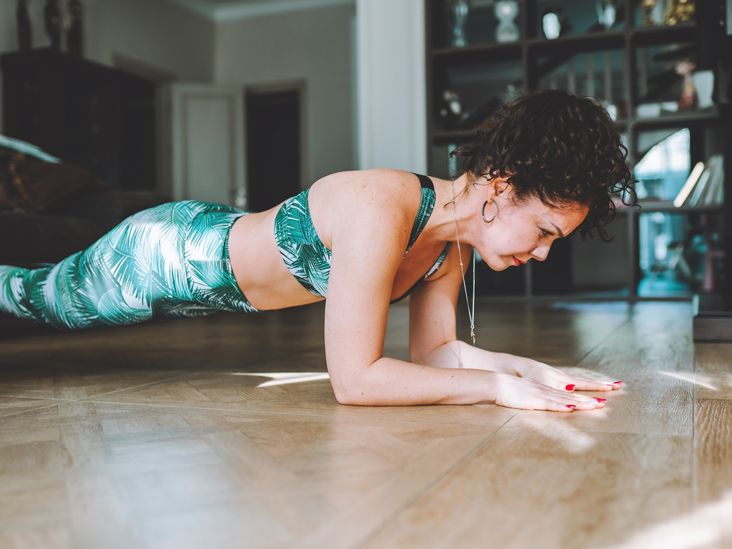
  • planks
  • triceps kickbacks
  • lat pulldowns
  • pull-ups (assisted if needed)
  • other squat or lunge variations (sumo squat, Bulgarian split squat, side lunge, reverse lunge, curtsy lunge)

Example workout split

Monday
Tuesday
Wednesday
Thursday
Friday

HIIT

Yoga

Strength

Steady-State Cardio

Strength

30 seconds of work, 30 seconds of rest, 1 minute of rest between circuits, repeat circuit 3 to 5 times

Hold each pose for 30 to 60 seconds

30 to 60 minutes, do each exercise for 3 sets of 8 reps

30 to 60 minutes

30 to 60 minutes, do each exercise for 3 sets of 8 reps

  • Jumping jacks
  • High knees
  • Mountain climbers
  • Plank hold
  • Mountain pose
  • Forward fold
  • Low lunge with twist
  • Cobra pose
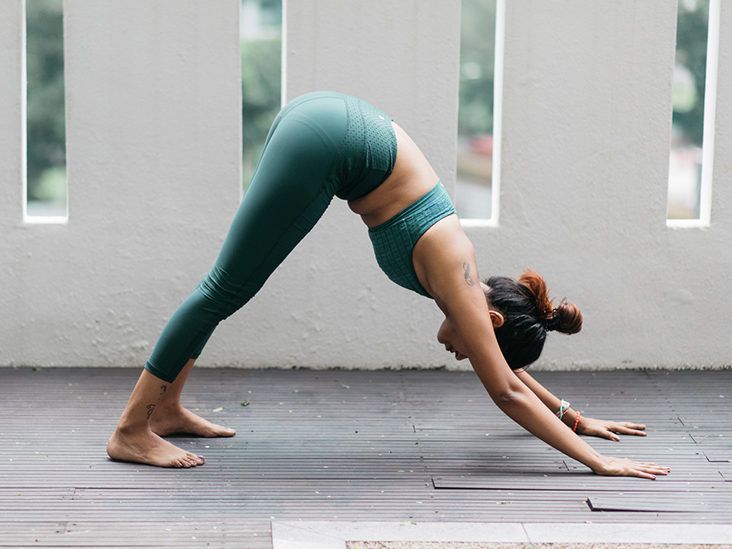
  • Downward dog
  • Upward dog
  • Squats
  • Lunges
  • Push-ups
  • Sit-ups
  • Brisk walking
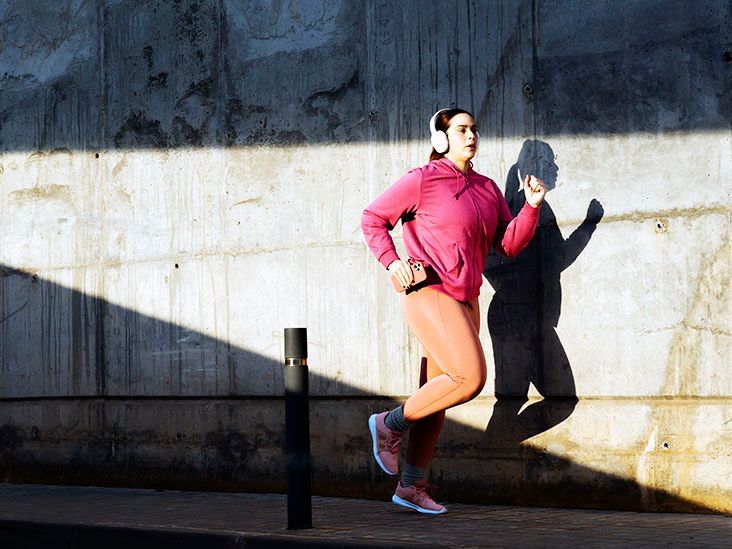
  • Jogging
  • Swimming
  • Deadlifts
  • Rows
  • Overhead presses
  • Chest presses

Share this article