














The Fast Facts
- Self-massage tools can enable you to have a relaxing massage in your own home.
- A wide range of at-home massage products is available, with many specialized for certain body areas. Some require manual effort, while some are powered.
- We recommend the Hyperice Hypervolt for athletes, the Zyllion Shiatsu Massager for people sitting for long periods, and the Back Buddy for hard-to-reach spots.
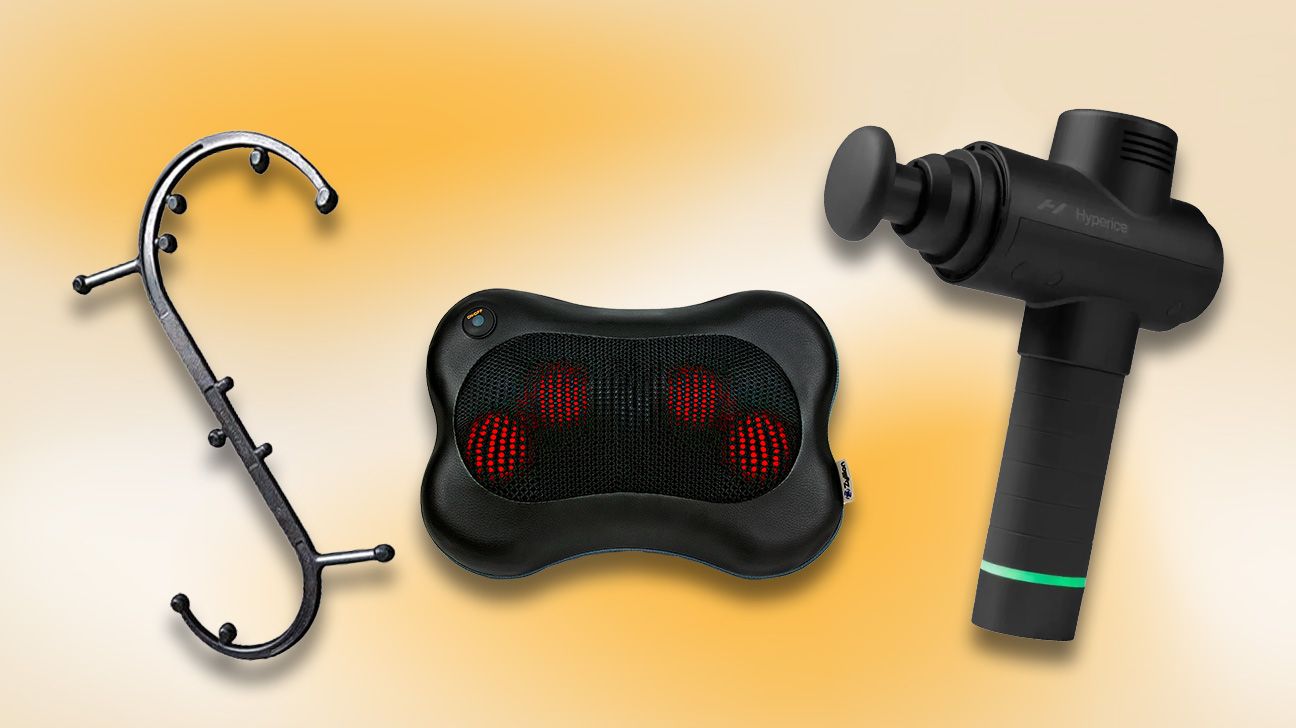
To compile our list of the best products to give yourself a massage, we considered factors such as:
- safety
- ease of use
- customer reviews
- price
Every product we feature has been carefully reviewed and vetted by our expert medical team. They assess details such as the medical claims a product makes and whether they’re supported by research, brand reputation, and more.
We never feature a product that fails our strict medical vetting process.
We asked a medical professional, Debra Sullivan, PhD, MSN, RN, CNE, COI, for her recommendations when considering at-home massage products.
Useful products and when to seek advice“The best self-massage products depend on whether someone wants relaxation, muscle recovery, or targeted pain relief. The most useful products include:
- trigger‑point canes for deep knots in the shoulders and neck
- foam rollers or massage sticks for sore legs after workouts
- massage oils paired with gentle rolling for full‑body relaxation
- percussion massagers for fast relief with minimal effort
- massage balls for foot pain or plantar fasciitis
You should consult with a professional massage therapist if several days of self-massage do not reduce pain, it becomes worse, pain radiates, or keeps coming back. A professional can assess whether it is actually muscular, nerve-related, or something else.
Other reasons include hard-to-reach areas, recovering from an injury, or wanting a full-body reset. A massage therapist can tell you when a massage would be helpful and when it won’t help.”
— Debra Sullivan, PhD, MSN, RN, CNE, COI
Quotes represent the opinions of our medical experts. All content is strictly informational and should not be considered medical advice.
We also asked Debra Sullivan for advice on performing self-massage safely. She cautions against massaging sensitive or delicate areas.
“A person doing self‑massage at home should avoid pressing directly on joints, bones, or the spine. These areas bruise easily and don’t benefit from pressure. People should also avoid massaging over inflamed, swollen, or injured areas, including varicose veins or areas with circulation issues, because increased circulation can worsen irritation.”
Sullivan stresses the importance of starting slow and light, and adjusting pressure carefully.
“It’s essential not to apply too much pressure too quickly—starting light prevents soreness—and to stay relaxed with slow breathing rather than tensing the body. Avoid long sessions on a single spot and skip massage right after eating.”
“Finally, anyone with certain medical conditions such as blood‑clotting disorders, nerve issues, or uncontrolled blood pressure should use caution or seek guidance before attempting self‑massage.”
A range of manual and powered devices is available for self-massage at home, with options for different body areas and pain points.
While at-home massage tools can provide relief for mild pain and support circulation and flexibility, they cannot replace medical treatment for severe or chronic pain.
If living with pain or discomfort has become normal for you, consider a professional massage or speaking with a doctor.